
Relationship Anxiety: Causes, Signs and How to Manage It.

Anxiety about relationships is more common than many people realise. Whether you're in a new partnership, a long-term relationship or navigating the early stages of dating, relationship anxiety can create doubt in moments that should feel secure.
It can show up as intrusive thoughts, constant reassurance-seeking, fear of abandonment or an overwhelming feeling that something will go wrong. For many people, this anxiety isn't necessarily caused by a specific problem in the relationship. Instead, underlying patterns of worry can attach themselves to something deeply important: our connection with another person.
Understanding relationship anxiety is the first step towards managing it. With greater self-awareness, practical strategies and the right support, it is possible to reduce the impact of anxiety and build healthier, more secure relationships.
What Does Relationship Anxiety Actually Look Like?
Relationship anxiety doesn't always announce itself clearly. Sometimes, it can disguise itself as vigilance, care or even love.
Some people experience a persistent feeling of unease, while others have intrusive, distressing thoughts that make them question their partner's feelings or the future of their relationship.
Common Signs and Symptoms of Relationship Anxiety
People experiencing relationship anxiety often share similar experiences, although the intensity and frequency of symptoms can vary.
Common signs include:
Constant reassurance-seeking: Repeatedly asking your partner whether they still love you or whether everything is okay, even after they have reassured you.
Catastrophic thinking: Imagining worst-case scenarios, such as your partner leaving, finding someone else or the relationship ending unexpectedly.
Overanalysing interactions: Replaying conversations, scrutinising your partner's tone of voice or reading into pauses and word choices.
Physical symptoms: Experiencing chest tightness, disrupted sleep or an upset stomach when worrying about your relationship.
Avoidance or hypervigilance: Pulling away emotionally to protect yourself from potential hurt, or closely monitoring your partner's behaviour in an attempt to feel safe.
These patterns can affect anyone, but they may be more pronounced in people experiencing generalised anxiety disorder or other anxiety conditions.
Importantly, experiencing relationship anxiety does not automatically mean your relationship is unhealthy or that something is wrong with your partner.
The Difference Between Normal Relationship Concerns and Relationship Anxiety
Every relationship involves moments of uncertainty. It is normal to wonder whether your partner is upset after a disagreement or to feel nervous before an important conversation.
Relationship anxiety becomes more concerning when worry is persistent, difficult to manage and begins to interfere with your wellbeing.
The differences can include:
Normal relationship concern: Occasional doubts or worries that gradually pass. Relationship anxiety: Persistent, intrusive thoughts that are difficult to quiet.
Normal relationship concern: Questions are resolved through conversation. Relationship anxiety: Reassurance provides only brief relief before the worry returns.
Normal relationship concern: Uncertainty is connected to a particular event or situation. Relationship anxiety: A general sense of dread appears without an obvious trigger.
Normal relationship concern: Worry does not significantly affect everyday life. Relationship anxiety: Anxiety begins to interfere with sleep, work, emotional wellbeing or daily functioning.
When worry becomes chronic and starts to erode your sense of security, professional support can help. Research also highlights the connection between relationship dynamics and psychological distress, suggesting that addressing anxiety can benefit both individual wellbeing and relationship quality.
Why Does Relationship Anxiety Develop?
Understanding where relationship anxiety comes from can reduce shame and help people identify what needs attention.
Relationship anxiety rarely develops without a context. It may be connected to attachment experiences, previous relationship difficulties or underlying mental health patterns.
Attachment Styles and Early Experiences
Our early relationships with caregivers can influence how we approach intimacy and emotional connection as adults.
People who experienced inconsistent care, emotional unavailability or abandonment during childhood may develop anxious attachment patterns. These experiences can influence how safe they feel when forming close relationships.
This may show up as:
Heightened sensitivity to signs of distance or disinterest.
Fear that love is conditional or temporary.
Difficulty trusting that a partner will stay.
A strong need for closeness and reassurance.
These patterns are not character flaws. They may have developed as ways of responding to earlier experiences but can create distress when carried into adult relationships.
Learning how to maintain a sense of self in relationships can help you recognise when past experiences are influencing your present reactions.
Previous Relationship Trauma
Experiences of betrayal, abandonment or emotional abuse can leave lasting emotional effects.
Even when a person is now in a caring and trustworthy relationship, their nervous system may respond as though the threat from a previous relationship is still present.
This can lead to:
Being constantly alert to possible dishonesty or emotional disconnection.
Finding it difficult to accept love or kindness without questioning it.
Building emotional walls to avoid becoming vulnerable.
Experiencing strong emotional reactions to situations that might otherwise seem harmless.
Processing past hurt can be an important part of developing healthier relationships. For many people, individual counselling provides a safe space to explore these experiences without placing the entire emotional burden on their current partner.
Relationship OCD and Intrusive Thoughts
For some people, relationship anxiety can involve obsessive-compulsive patterns.
Relationship OCD, often referred to as R-OCD, involves persistent, intrusive doubts about the relationship or partner. These thoughts may centre on questions such as:
Do I really love my partner?
Are they the right person for me?
Is this relationship good enough?
What if I am making a mistake?
These thoughts can cause considerable distress and may lead to compulsive behaviours, including:
Constantly comparing your partner with other people.
Seeking reassurance from friends, family or online sources.
Mentally reviewing the relationship for proof of love or compatibility.
Avoiding situations that trigger doubt or uncertainty.
A review on Relationship OCD explains that these intrusive thoughts can be ego-dystonic, meaning they conflict with a person's values or sense of what they genuinely want.
Cognitive behavioural therapy (CBT) can help address these patterns by focusing on the thoughts, anxiety and compulsive responses that maintain the cycle.
How Relationship Anxiety Affects Your Relationship
Relationship anxiety doesn't only affect the person experiencing it. Over time, it can influence both partners and create patterns that intensify distress.

Communication Breakdowns
When anxiety is high, communicating clearly can become difficult.
You might struggle to express your needs because you fear your partner's reaction or worry about being rejected. Alternatively, anxiety may lead to behaviours intended to prevent misunderstanding or emotional hurt.
These can include:
Over-explaining or justifying yourself to avoid being misunderstood.
Withdrawing from conversations to avoid conflict or appearing needy.
Asking the same questions repeatedly, which may test your partner's patience.
Interpreting neutral comments as criticism, rejection or evidence that something is wrong.
Over time, these patterns can leave both partners feeling frustrated, misunderstood or emotionally exhausted.
Understanding why partners become defensive when feelings are shared can help couples recognise how anxiety influences communication and begin breaking these cycles.
The Reassurance Trap
One of the most common patterns associated with relationship anxiety is the reassurance cycle.
It often unfolds in the following way:
An anxious thought appears. For example, “They don't really care about me.”
Distress increases. The thought becomes difficult to ignore, and anxiety grows.
Reassurance is sought. You ask your partner for comfort or confirmation that everything is okay.
Your partner provides reassurance. They offer affection, explanations or words of support.
Relief is temporary. You feel better for a short time, perhaps minutes or hours.
The doubt returns. The original worry reappears, sometimes feeling even more convincing.
The cycle repeats. You seek reassurance again to reduce the discomfort.
This pattern can be exhausting for both partners.
The person seeking reassurance may feel ashamed or frustrated that they cannot simply believe what their partner tells them. The partner providing reassurance may feel helpless because nothing they say seems to provide lasting comfort.
Research into obsessions and compulsivity suggests that reassurance-seeking can temporarily soothe anxiety while also reinforcing the pattern that keeps it going.
The aim is not to eliminate reassurance or emotional support from a relationship. Instead, it is to develop additional ways of managing anxiety so that reassurance is no longer the only way to feel safe.
When Your Relationship Stops Feeling Safe
For someone experiencing relationship anxiety, the relationship itself can paradoxically become a source of distress rather than comfort.
This creates a painful situation: the person they turn to for security can become associated with the anxiety they are trying to escape.
Partners may notice that:
Their presence triggers anxiety rather than providing comfort.
Attempts to reassure are met with scepticism or further questions.
The anxious partner struggles to relax, even during positive moments.
Emotional or physical intimacy brings up fear rather than connection.
This does not necessarily mean the relationship is unsafe. However, it is important to recognise that anxiety and genuine relationship problems can coexist. Not every concern should automatically be dismissed as anxiety.
Exploring when your relationship stops feeling like a safe place can help partners better understand these experiences and consider what is needed to rebuild emotional security.
Practical Strategies for Managing Relationship Anxiety
Although relationship anxiety can feel overwhelming, there are practical ways to manage it.
Progress often involves individual work, developing new coping skills and, where appropriate, working collaboratively with your partner.
1. Develop Self-Awareness and Monitor Your Thoughts
The first step is learning to notice anxious thoughts without immediately judging them or reacting to them.
Start by observing when your anxiety appears and what might trigger it.
You could keep a simple journal and record:
The thought: What exactly am I worrying about?
The situation: What was happening immediately before the thought appeared?
The physical response: What sensations did I notice in my body?
My reaction: What did I do in response to the anxiety?
Over time, you may notice that your anxiety increases when your partner is busy, after particular conversations or at certain times of the day.
Recognising these patterns creates an opportunity to pause and choose how to respond rather than reacting automatically.
2. Use Evidence-Based Anxiety Management Techniques
Several approaches can help reduce anxiety and make intrusive thoughts easier to manage.
Cognitive restructuring
Cognitive restructuring involves examining anxious thoughts and considering whether they accurately reflect the available evidence.
When a worrying thought appears, ask yourself:
What evidence supports this worry?
What evidence might suggest another explanation?
Am I assuming the worst without enough information?
Could there be another way to understand this situation?
The aim is not to dismiss genuine concerns or convince yourself that everything is fine. It is to develop a more balanced understanding of what is happening.
Mindfulness and grounding
When anxiety begins to spiral, grounding techniques can help bring your attention back to the present moment.
One option is the 5-4-3-2-1 grounding technique:
Name five things you can see.
Notice four things you can touch or feel.
Identify three things you can hear.
Notice two things you can smell.
Identify one thing you can taste.
This exercise can help interrupt rumination and reconnect you with your immediate surroundings.
Scheduled worry time
Trying to suppress anxious thoughts throughout the day can sometimes make them feel more persistent.
Instead, set aside approximately 15 minutes each day to reflect on your worries.
When an anxious thought appears outside that period, acknowledge it, make a brief note if helpful and return to what you were doing. You can revisit it during your designated worry time.
This approach can help create boundaries around worry rather than allowing it to dominate your day.
3. Build Distress Tolerance
An important part of managing relationship anxiety is learning to sit with discomfort without immediately seeking reassurance or avoiding the situation.
This involves developing the ability to experience uncertainty without feeling compelled to resolve it straight away.
You can practise by:
Recognising that some uncertainty is a normal part of every relationship.
Allowing anxious feelings to be present for gradually longer periods before responding.
Using self-soothing strategies, such as slow breathing, movement or creative activities.
Reminding yourself that experiencing anxiety does not automatically mean something is wrong.
According to the World Health Organization's information on anxiety disorders, anxiety disorders are among the most common mental health conditions worldwide.
Learning to tolerate anxiety is a skill that can improve with time, practice and appropriate support.
The goal is not to force yourself to ignore your feelings. It is to develop confidence in your ability to manage them without needing immediate certainty.
When Should You Seek Professional Support?
It can be difficult to know when relationship anxiety has become more than something you can manage independently.
You do not need to wait until you are in crisis to seek support. Early intervention can help prevent unhelpful patterns from becoming more entrenched.
Signs That Professional Help May Be Beneficial
Consider seeking support if:
Anxiety affects daily functioning: Worry interferes with your sleep, work, health or general wellbeing. Individual counselling may be helpful.
Reassurance-seeking becomes frequent: You find yourself asking for reassurance daily or multiple times a day. Professional support can help you understand and interrupt the cycle.
Your partner feels overwhelmed or resentful: Anxiety is creating repeated conflict or emotional exhaustion. Individual and couples counselling may both be beneficial.
Past trauma resurfaces: Earlier experiences are affecting how you respond to your current relationship. Trauma-informed therapy may help.
You suspect OCD or another anxiety condition: Persistent intrusive thoughts or compulsive behaviours are causing significant distress. A clinical assessment can help identify appropriate treatment.
Understanding when couples should seek counselling can help normalise reaching out for support before relationship difficulties become more difficult to address.
What Can Counselling Offer?
Working with a qualified counsellor can provide a supportive environment in which to understand and manage relationship anxiety.
Counselling may offer:
A neutral, confidential space: Explore your fears and concerns without feeling that your partner must carry the entire emotional burden.
Greater awareness of underlying patterns: Identify thoughts, behaviours and relationship dynamics that may be difficult to recognise on your own.
Evidence-based strategies: Develop practical skills tailored to your experiences and needs.
Support for both partners: Learn how anxiety affects the relationship and how to respond to each other more effectively.
Couples counselling is not only for relationships in crisis. It can provide an opportunity for both partners to understand what is happening, improve communication and develop healthier ways of managing anxiety together.
Individual or Couples Counselling for Relationship Anxiety?
A common question is whether it is better to pursue individual counselling, couples counselling or both.
The most suitable approach depends on your circumstances, the nature of the anxiety and how it is affecting the relationship.
Individual counselling may be particularly helpful when:
Anxiety is connected to past trauma or attachment experiences.
You want to develop personal coping skills before addressing relationship concerns together.
Your partner is not significantly contributing to the anxiety.
You need space to process your experiences independently of the relationship.
Couples counselling may be valuable when:
Relationship patterns are reinforcing anxiety.
Communication difficulties are causing distress for both partners.
Both people want to understand how anxiety affects their relationship.
You are working towards building or rebuilding trust and emotional connection.
A combination of individual and couples counselling may be beneficial when:
You are addressing both personal anxiety patterns and relationship dynamics.
Past trauma is affecting how the relationship functions.
You want individual support while also working collaboratively on the relationship.
It is worth remembering that you do not always need your partner to participate before you can begin working on relationship concerns. Exploring whether you have to bring your partner to relationship counselling can help you understand the options available to you.
How to Support a Partner Experiencing Relationship Anxiety
If you are reading this because your partner experiences relationship anxiety, understanding their experience is an important first step.
Anxiety can affect both people in a relationship. Learning how to offer support while maintaining your own emotional wellbeing can help prevent the anxiety from becoming a source of ongoing conflict.
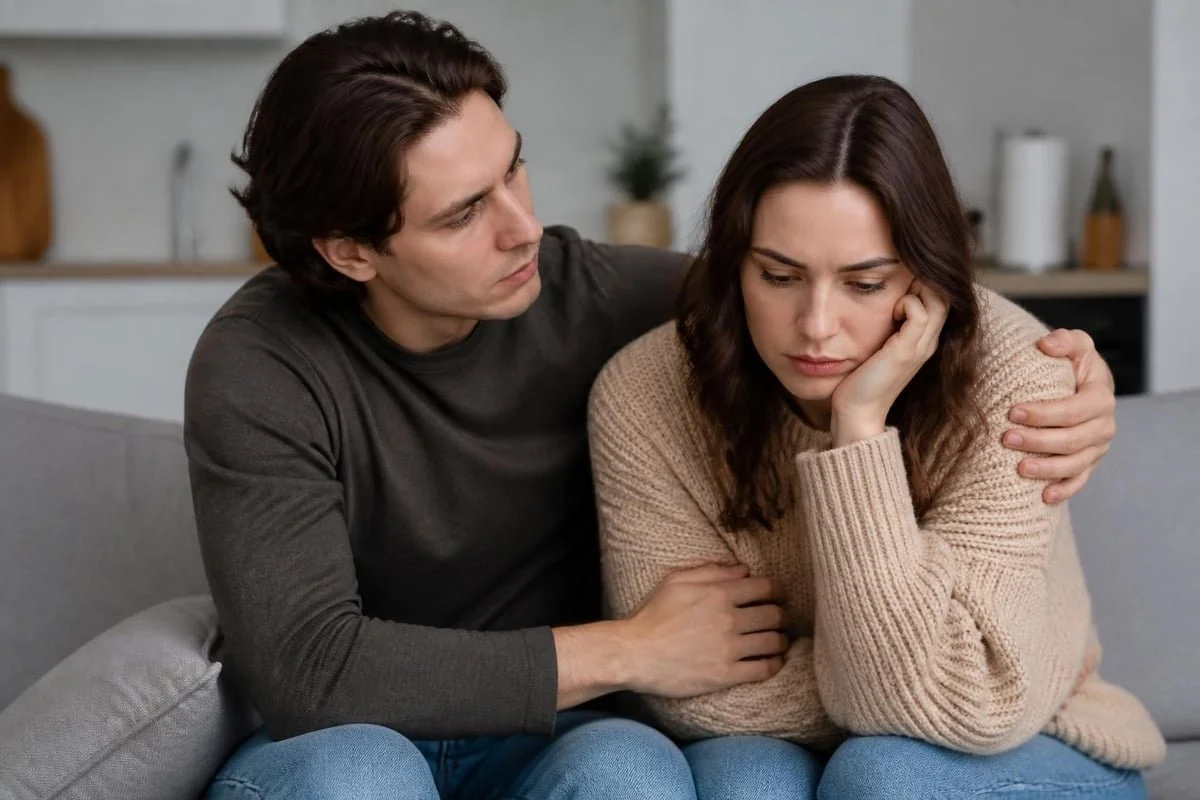
What Helps and What Doesn't?
Approaches that may help include:
Validating their feelings: Acknowledge their distress without necessarily agreeing with the anxious thought. For example, “I can see this is really distressing for you.”
Being consistent and reliable: Follow through on commitments and communicate clearly.
Setting gentle boundaries: If reassurance-seeking becomes excessive, work together on healthier ways of managing the anxiety.
Encouraging professional support: Suggest counselling as a way to develop additional coping skills, rather than presenting it as an ultimatum.
Practising patience: Recognise that changing established patterns takes time while also respecting your own limits.
Approaches that may make things more difficult include:
Dismissing their anxiety as irrational or silly.
Providing endless reassurance without addressing the underlying pattern.
Taking responsibility for fixing their anxiety.
Walking on eggshells to avoid triggering worry.
Withdrawing affection or connection as punishment for their anxiety.
Information from the NHS on maintaining healthy relationships and mental wellbeing highlights the importance of supporting both partners when anxiety affects a relationship.
Your wellbeing matters too. Supporting someone does not mean sacrificing your own emotional needs or becoming solely responsible for how they feel.
Communicating Your Own Needs
Supporting a partner with relationship anxiety can be emotionally demanding.
You might feel:
Frustrated because nothing you say seems to provide lasting comfort.
Guilty for needing space or setting boundaries.
Exhausted by repeated requests for reassurance.
Worried that setting limits will make your partner more anxious.
These feelings are understandable. Healthy support involves communicating your own needs and limits openly, while remaining compassionate towards your partner.
For example, you might say:
“I love you and I want to support you, but when we have this conversation multiple times a day, I feel drained. Can we work together on finding other ways to manage these worries?”
Honesty, when expressed with care, can strengthen a relationship rather than harm it. It allows both partners to acknowledge the impact of anxiety and find a more sustainable way forward.
Understanding why your partner might shut down during arguments may also help you approach difficult conversations with greater awareness and sensitivity.
Building Long-Term Relationship Security
Overcoming relationship anxiety does not mean eliminating every worry or achieving complete certainty about the future.
Instead, it involves building enough security within yourself and your relationship to tolerate the uncertainty that naturally comes with loving another person.
Strengthening the Foundations of Your Relationship
Secure relationships are supported by several important elements:
Consistent, reliable communication: Being able to discuss needs, boundaries and emotions openly.
Shared values and vision: Understanding what matters to each of you and the direction you want your relationship to take.
Emotional attunement: Helping each other feel seen, heard and understood.
Repair skills: Learning how to reconnect after conflict, misunderstanding or emotional disconnection.
Individual identity: Maintaining your own interests, values, friendships and sense of self alongside your identity as a couple.
These foundations help create a relationship where both partners can feel connected without needing constant reassurance that everything is okay.
Learning how couples can rebuild connection and communicate better can provide practical tools for strengthening these aspects of your relationship.
Accepting Uncertainty as Part of Connection
One of the most challenging aspects of relationship anxiety is accepting that complete certainty in love is impossible.
Relationships involve two independent people who grow, change and make their own choices over time. Trying to eliminate every possible risk or doubt can become an exhausting pursuit that reinforces the very anxiety you are trying to manage.
Accepting uncertainty does not mean giving up on your relationship or resigning yourself to feeling anxious. Instead, it involves learning to:
Recognise that your partner's love can be genuine without being guaranteed forever.
Understand that having doubts does not automatically mean something is wrong.
Build trust through consistent experiences rather than relying on constant reassurance.
Focus on what is happening in the present and what is working in the relationship, rather than becoming consumed by what might go wrong.
This shift from seeking certainty to building resilience can change how you experience relationships.
Rather than needing to know exactly what will happen, you can develop confidence in your ability to respond to difficulties, communicate your needs and make decisions as circumstances change.
Finding Support for Relationship Anxiety
Relationship anxiety can feel isolating and overwhelming, but understanding your patterns, developing new skills and accessing compassionate support can make a meaningful difference.
Whether your anxiety is connected to attachment patterns, past experiences or an underlying anxiety condition, recognising what is happening is an important first step towards change.
You do not have to navigate these experiences alone, and you do not need to wait until your relationship is in crisis to seek help.
At The Connection Room, we offer individual and couples counselling in Essendon, providing a confidential space to explore relationship anxiety, strengthen communication and develop healthier, more secure relationships.
If relationship anxiety is affecting your wellbeing or your connection with your partner, professional support can help you understand the patterns involved and explore practical ways moving forward.
