Relationship Counselling: How Couples Can Rebuild Connection and Communicate Better
Relationships are an important part of our emotional wellbeing, but even strong relationships need care and attention. Whether you’re navigating recurring conflict, feeling disconnected or simply wanting to strengthen your bond, relationship counselling can provide a supportive space to understand what’s happening and explore ways forward.
With professional support, couples can learn to communicate more clearly, work through hurt, rebuild trust where possible and develop healthier ways of relating to one another.
You don’t have to wait until your relationship reaches a crisis point to seek help. Sometimes, a little support at the right time can help you understand each other better and prevent difficulties from becoming more entrenched.
Understanding What Relationship Counselling Offers
Relationship counselling involves working with a trained counsellor to explore the challenges, patterns and experiences affecting your relationship.
It isn’t only for couples who are considering separation. You might seek counselling during a major life transition, before marriage, after a breach of trust or simply because you want to feel closer and more connected.
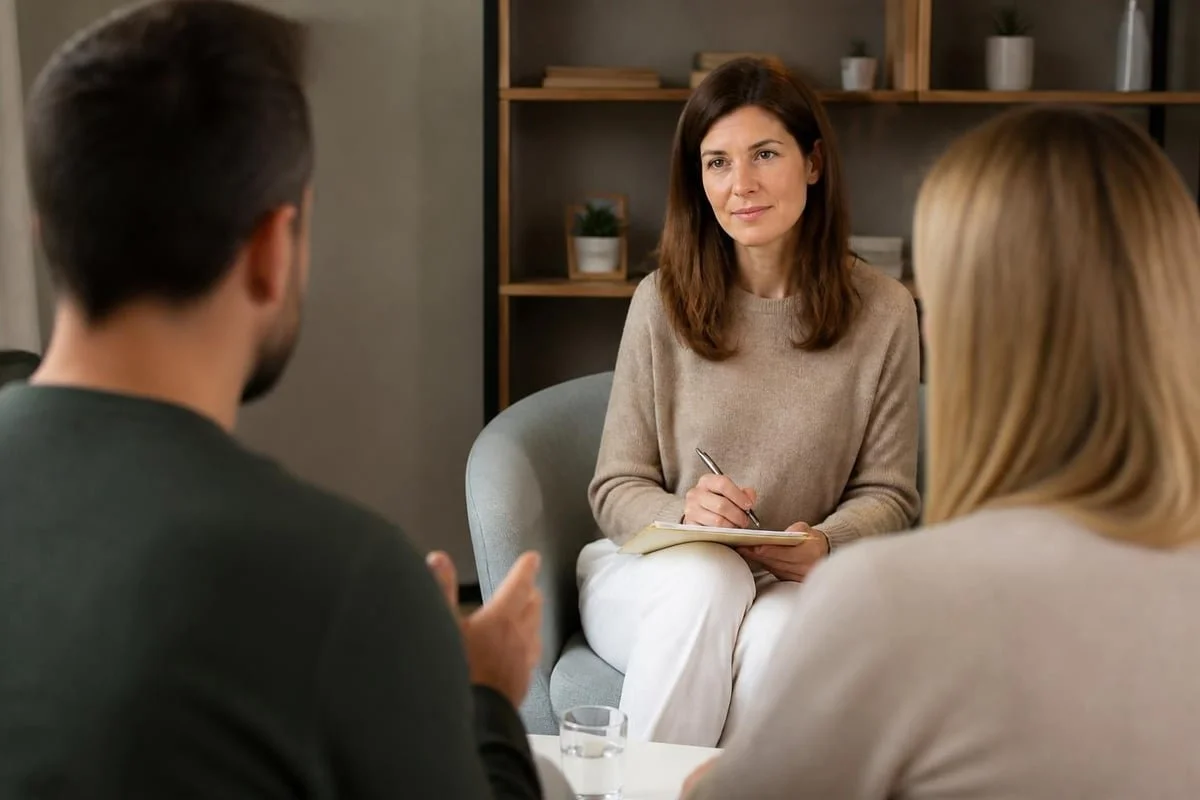
A counsellor provides a structured space where both partners can share their experiences, feelings and needs. The aim is to understand what is happening between you, identify patterns that contribute to conflict or distance, and explore practical ways to respond differently.
What Can Relationship Counselling Help With?
Relationship counselling may involve:
Understanding recurring relationship patterns and how they develop.
Improving communication and learning to manage disagreements more constructively.
Exploring emotional needs and how each partner expresses them.
Recognising behaviours that contribute to conflict or disconnection.
Learning how to repair after arguments and hurtful interactions.
Exploring trust, intimacy and emotional closeness.
Identifying shared goals and practical steps towards change.
Research into couple therapy continues to explore the processes that contribute to change and the factors that influence outcomes. The research is developing, and results vary between couples. Finding an approach and counsellor suited to your circumstances is an important part of the process.
You can read more in this review of four decades of couple therapy process research.
When Should You Consider Relationship Counselling?
Many couples wonder when the right time to seek professional support might be. It can be tempting to wait until things become unbearable, but you don’t need to be in crisis before asking for help.
You might consider relationship counselling if:
You keep having the same arguments without reaching a resolution.
You feel emotionally disconnected or more like housemates than partners.
Trust has been damaged and you’re struggling to move forward.
Conversations quickly become defensive, heated or hurtful.
A major life change is putting pressure on your relationship.
You want to prepare for marriage and discuss your future together.
You’re finding it difficult to talk openly about intimacy, affection or emotional needs.
Individual stress or mental health challenges are affecting your relationship.
This article explores the signs that it may be time to seek support: When Should Couples Seek Counselling?.
Seeking support earlier can give you more opportunity to understand a pattern before it becomes deeply established. However, if you’ve been struggling for a long time, it doesn’t automatically mean that change is no longer possible.
Recognising Patterns That May Be Keeping You Stuck
Sometimes, the problem isn’t just what you argue about. It’s the way the conversation unfolds.
For example:
One partner raises a concern, while the other feels criticised and becomes defensive.
One partner seeks reassurance or wants to talk, while the other withdraws or shuts down.
Both partners focus on proving their version of events rather than understanding each other.
Hurt remains unresolved, so the next disagreement brings old frustrations back to the surface.
Over time, these patterns can leave both people feeling misunderstood, rejected or alone.
These reactions don’t necessarily mean that either person intends to hurt the other. They can be influenced by past experiences, learned ways of communicating and responses to stress. Understanding the pattern can help couples find new ways to respond without automatically blaming themselves or each other.
You can read more about why a partner might become defensive when you share how you feel.
Different Approaches to Relationship Counselling
There are several approaches to couples counselling. Each has its own focus, and counsellors may draw on more than one approach depending on a couple’s needs, goals and circumstances.
Emotionally Focused Therapy (EFT)
Focus: Emotional connection, attachment needs and the patterns that develop when partners feel hurt, rejected or disconnected.
May be helpful for: Couples who feel distant, struggle to express vulnerability or become caught in recurring pursue-and-withdraw patterns.
The Gottman Method
Focus: Friendship, communication, managing conflict, building trust and strengthening the positive aspects of a relationship.
May be helpful for: Couples who want practical skills and structured ways to understand and improve their relationship.
Imago Relationship Therapy
Focus: How earlier experiences and relationship histories can influence expectations, emotional reactions and interactions with a partner.
May be helpful for: Couples who want to explore recurring patterns and practise more intentional ways of listening and responding.
Narrative Therapy
Focus: The stories people develop about themselves, their partners and their relationships.
May be helpful for: Couples who want to examine unhelpful assumptions, move away from blame and develop a different understanding of their shared experiences.
No single approach is right for every couple. A counsellor can help you understand what different methods involve and discuss which approach may best suit your circumstances.
For a general overview, read Harvard Health’s article on whether couples therapy might be right for you.
The Role of Individual Sessions Alongside Couples Counselling
Sometimes, individual sessions may form part of the broader counselling process. These can provide space to explore personal experiences, emotional responses, mental health concerns or relationship patterns that may be difficult to discuss together.
Individual sessions do not replace the work of understanding the relationship itself. Instead, they may complement couples work when appropriate.
Couple therapy has also been studied as an approach for couples experiencing depression and relationship distress. However, the available evidence varies in quality, and treatment recommendations depend on the circumstances of each person and couple.
You can read the Cochrane review of couple therapy for depression.
What Happens During Relationship Counselling?
Your first session will generally involve learning about your relationship, what has brought you to counselling and what each of you hopes to achieve.
You may discuss:
Your relationship history and what initially brought you together.
The concerns you’re currently experiencing.
What is working well and what you value about the relationship.
The patterns that tend to arise during disagreements.
What each person needs to feel heard, respected and connected.
Your goals for counselling and what you would like to change.
Your counsellor will help establish a framework for respectful conversations. This may include agreeing on how to manage interruptions, recognising when emotions are becoming overwhelming and taking a break when necessary.
Later sessions may involve practising communication skills, exploring emotional triggers, addressing unresolved hurt and developing practical ways to reconnect.
Practical Skills You Can Develop Through Counselling
Couples may work towards learning how to:
Express feelings and needs without relying on criticism or blame.
Listen to understand rather than preparing a response.
Recognise when emotions are becoming overwhelming and take a suitable break.
Return to difficult conversations once both partners are ready.
Repair after arguments instead of allowing hurt to remain unresolved.
Understand their own needs and their partner’s perspective.
Build small, regular habits that support connection.
These skills need to be practised outside the counselling room, too. You might agree to have a short weekly check-in, share appreciations, make time for a conversation without distractions or practise approaching disagreements differently.
Lasting change usually involves more than understanding what has gone wrong. It also involves trying new ways of responding in everyday life.

In-Person and Online Relationship Counselling
Relationship counselling may be available in person or through secure telehealth platforms. Each option has advantages, and the most suitable format depends on your needs, circumstances and preferences.
Online Counselling
Online sessions may suit couples who:
Have busy schedules or difficulty travelling.
Live a considerable distance from a suitable counsellor.
Have mobility or accessibility needs.
Prefer to attend from a familiar environment.
It’s important to have a private space where both partners can speak freely and confidentially. Your counsellor can discuss the practical and safety considerations of online sessions before you begin.
The American Psychological Association’s telepsychology guidelines provide information about considerations for psychologists providing services remotely. These guidelines are written for psychologists, but they may also offer useful background when considering online psychological services.
In-Person Counselling
In-person sessions provide a dedicated space away from the usual pressures and distractions of home. Some couples prefer being in the same room as their counsellor, while others find it easier to speak openly online.
In-person work can also allow the counsellor to observe non-verbal communication more directly.
Neither format is automatically better for every couple. The important considerations are whether the format is appropriate, whether both partners can participate safely and whether it supports the work you need to do.
How to Find the Right Relationship Counsellor
Choosing a counsellor is an important decision. You want someone with relevant training and experience who can help you work through relationship concerns in a way that feels respectful and appropriate.
When considering a counsellor, look at the following.
Qualifications and Relationship Experience
Do they have relevant qualifications and training in counselling?
Do they have specific experience working with couples and relationship concerns?
Are they familiar with the issues you want to address?
Approach and Communication Style
Can they explain how they work and what you might expect?
Does their approach fit your needs and values?
Do you feel that both partners will have an opportunity to be heard?
Safety and Professional Boundaries
Do they explain confidentiality and its limits?
Do they assess whether couples counselling is appropriate for your circumstances?
Can they discuss difficult issues without automatically treating every behaviour or contribution as equal?
Practical Considerations
Is the location or online format suitable?
Are the appointment times manageable?
Are the fees clear, and do you understand the cancellation policy?
During an initial conversation, you can ask about the counsellor’s experience, approach, session structure and how progress will be reviewed.
You should be able to ask questions and make an informed decision about whether the service feels right for you.
Common Concerns About Relationship Counselling
It’s understandable to feel uncertain about counselling, particularly if you haven’t attended before or your partner is hesitant.
Here are some common concerns and what may help to clarify them.
“Does Wanting Counselling Mean Our Relationship Has Failed?”
No. Seeking support can be a way of taking your relationship seriously and recognising that some patterns are difficult to change without help.
Counselling isn’t a sign that you have failed. It is an opportunity to understand what is happening and decide what you want to do next.
“Will Talking About Our Problems Make Things Worse?”
Difficult conversations can bring up strong emotions, particularly when hurt has been building for a long time. A counsellor can help structure these conversations, slow them down and support more constructive communication.
However, couples counselling is not appropriate in every situation. Where there is fear, intimidation, coercive control or family violence, joint sessions may create additional risks. Safety needs to be considered before proceeding.
“Will the Counsellor Take Sides?”
A couples counsellor aims to understand both partners’ experiences and the patterns occurring within the relationship. This does not mean treating every behaviour as equally acceptable or avoiding accountability.
A counsellor may need to address harmful behaviour directly and assess whether joint work is suitable.
“What If My Partner Won’t Attend?”
You can still seek individual counselling to explore your own experiences, needs, boundaries and choices.
Working individually may help you understand how you want to respond to the difficulties you are facing. It does not mean that you are responsible for fixing the relationship on your own.
Read more in Do I Have to Bring My Partner to Relationship Counselling?.
“Are Our Problems Too Big or Too Small for Counselling?”
Relationship counselling can help with a wide range of concerns, from improving communication to working through longstanding conflict or uncertainty about the future.
The question is not whether your relationship is struggling enough to deserve support. It is whether counselling may help you understand your situation and work towards the changes you want.
Is Relationship Counselling Worth the Investment?
That depends on your circumstances, what you hope to achieve and whether the service is appropriate for you.
It may help to consider how ongoing conflict or disconnection is affecting your wellbeing, your family life and your relationship. Counselling cannot guarantee a particular outcome, but it can provide dedicated time to work through concerns and develop practical skills.
Fees vary according to the provider, qualifications, experience, session length and other factors. Ask about fees and any additional costs before commencing.
In Australia, Medicare rebates are subject to specific eligibility requirements and generally apply to eligible individual psychological services rather than routine couples counselling. If you are considering using Medicare or private health insurance, check directly with the relevant provider about what is covered.
For more information, read Is Couples Counselling Worth the Investment?.
Relationship Counselling at Different Stages of Life
Relationships change as people move through different stages of life. What a couple needs at the beginning of their relationship may be different from what they need after many years together, becoming parents or experiencing a major transition.
Early Relationships and Premarital Counselling
Early support can help couples discuss expectations and build healthy communication habits before difficulties become deeply established.
Premarital counselling may provide an opportunity to talk about:
Finances and shared responsibilities.
Expectations about children and parenting.
Career priorities and future plans.
Family relationships and boundaries.
Emotional and physical intimacy.
How you each respond to conflict.
Values, expectations and what commitment means to you.
You don’t need to agree on everything. The aim is to understand your differences and learn how to navigate them with respect.
Read more about couples therapy in your twenties and thirties and couples counselling before marriage.
Established Relationships and Midlife Transitions
Long-term relationships can be affected by changing priorities, parenting, caring responsibilities, retirement, an empty nest, health concerns or years of unresolved resentment.
Counselling can help couples make sense of these changes, revisit their expectations and work out how they want their relationship to look in the next stage of life.
Separation and Support After a Relationship Ends
Relationship counselling does not always aim to keep a couple together. In some circumstances, it may help partners clarify their options, discuss difficult decisions or work towards a more respectful separation.
When children are involved, support may also help parents consider how to communicate about changes and reduce unnecessary conflict.
Individual counselling can provide support as someone adjusts to life after a separation and begins to consider what comes next.
Read Separated, But Still Finding Your Feet? for more on navigating this transition.

Understanding Individual Wellbeing and Relationship Health
Our emotional wellbeing and our relationships can influence each other. Stress, anxiety, depression, trauma and other personal challenges may affect how we communicate, manage conflict or respond to a partner.
For example:
Anxiety may make uncertainty or perceived rejection harder to manage.
Depression may affect energy, emotional availability and intimacy.
Past experiences may influence how safe it feels to express needs or trust another person.
Differences in communication or sensory needs may contribute to misunderstandings.
Alcohol or other substance use may affect communication, trust and safety.
These experiences do not affect every person in the same way, and they should not automatically be treated as the explanation for relationship difficulties.
Where appropriate, counselling may involve individual support alongside couples work. The focus should be on understanding the circumstances of each person and deciding what support is suitable.
Making the Most of Relationship Counselling
Counselling works best when both partners have opportunities to participate honestly and consider what they may be able to change.
You can support the process by:
Attending sessions consistently where possible.
Practising agreed skills between appointments.
Approaching difficult conversations with curiosity rather than an immediate need to defend yourself.
Being honest with your counsellor about what is and isn’t helping.
Taking responsibility for your own behaviour without assuming responsibility for your partner’s.
Allowing time for new habits to develop.
Progress is rarely a straight line. You may notice improvements in one area while continuing to struggle in another. What matters is whether you are gaining a clearer understanding of the relationship and making meaningful progress towards your goals.
It can also help to remember that a healthy relationship does not have to be perfect. Differences and disagreements are part of being in a relationship; how you respond to them matters.
Read Your Relationship Doesn’t Have to Be Perfect to Be Good.
How Long Does Relationship Counselling Take?
There is no single timeframe that suits every couple.
Some people notice changes in particular conversations relatively quickly. Other concerns, especially those involving longstanding conflict, damaged trust or significant life experiences, may take longer to work through.
The timeframe can depend on:
The nature and complexity of the concerns.
How long the difficulties have been occurring.
Whether both partners can participate safely and openly.
Each person’s willingness to practise new skills.
The goals agreed upon with the counsellor.
Your counsellor should discuss your goals with you and review progress over time. You should also be able to raise concerns if counselling does not seem to be helping in the way you expected.
Relationship Counselling at The Connection Room
At The Connection Room in Essendon, couples counselling provides a supportive space to explore relationship difficulties, understand recurring patterns and work towards meaningful change.
The focus is on helping you communicate more clearly, understand each other’s experiences, address conflict and explore ways to rebuild connection where possible.
Whether you are facing a specific challenge or want to strengthen your relationship before problems grow, counselling can help you consider what is happening and what you would like to be different.
Learn more about Couples Counselling at The Connection Room.
View image: Couples counselling at The Connection Room
Building Healthier Relationship Patterns
The ways we respond in relationships are often shaped by our past experiences, family environments, expectations and previous relationships.
Becoming aware of these influences can help us recognise why certain situations trigger strong reactions or why we find ourselves repeating familiar patterns.
For example, one person may respond to conflict by wanting to resolve it immediately, while the other needs time to process. One may seek reassurance when feeling disconnected, while the other withdraws when feeling overwhelmed.
Neither response tells the whole story. Understanding the pattern can help couples find ways to respond that are more considerate of both people’s needs.
You may find these articles helpful:
Creating Change That Lasts
Relationship counselling can help couples work towards:
Understanding the patterns that keep them stuck.
Developing skills that can be used in everyday situations.
Recognising emotional triggers and automatic reactions.
Reflecting on their own behaviour and taking responsibility where appropriate.
Learning how to repair after disagreements.
Building greater emotional awareness and resilience.
The goal is not to create a perfect relationship. It is to develop healthier ways of managing challenges, reconnecting after difficult moments and maintaining respect and closeness through the changes life brings.
The Wider Benefits of Healthy Relationships
The quality of our close relationships can influence our everyday wellbeing and the emotional environment we create at home.
When couples learn to communicate more constructively, manage disagreements and respect each other’s needs, these skills may also benefit family relationships and interactions with others.
For parents, how disagreements are handled can influence the atmosphere children experience at home. Modelling respectful communication, taking responsibility and repairing after conflict can help children see that differences do not have to mean disrespect or disconnection.
Investing in a relationship is not about avoiding every disagreement. It is about learning how to work through difficulties in ways that support wellbeing, respect and connection.
Moving Forward With Confidence
Relationship counselling can offer guidance and practical support when you feel stuck, disconnected or uncertain about the future of your relationship.
Whether you are considering counselling for the first time or have already begun working on your relationship, you do not need to have all the answers before seeking support.
The decision to seek help does not mean your relationship has failed. It means you are taking the time to understand what is happening and consider what might help.
If you’re unsure how to raise the idea with your partner, read How Do I Talk to My Partner About Trying Counselling?.
You may also find it helpful to read You Don’t Have to Wait Until Your Relationship Is in Crisis to Ask for Support.
Relationship counselling should meet you where you are, help you understand your options and support you in working towards the changes that are right for your circumstances.
If you would like to explore whether counselling may be helpful for you, visit The Connection Room to learn more about available support in Essendon.